In
a martini mixer, take equal parts of wealthy Southern families and
impoverished African-American people. Add one part each of French
architecture, live jazz, blues musicians and street performers. Fill it
to the brim with bourbon. Shake well and serve in a cocktail glass with
a plate of oysters and alligator appetizers. Voila! Say hello to New
Orleans, Louisiana -also affectionately called Nola, the Crescent City and the Big Easy.
From prostitution to slave trade, booze to drugs, this Sin City of the South has seen it all. Named after the French monarch, Louis XIV, the colony of Louisiana once covered present day Louisiana, Arkansas, Mississippi and other states stretching all the way to Nebraska and Michigan in the north and the french colonies in Canada. The city of New Orleans was founded in 1718 and named after the city of Orleans in France. The ruling family in France at that time, the Royal House of Bourbon, is the root behind the name of the city's iconic street. Spanish architecture began to shape the landscape of the city's streets after it was sold to Spain in 1763.
Although New Orleans was a major center for slave trade, the treatment meted out to these slaves was markedly different and in every way better than what slaves received in other parts of the country. There were several 'free persons of colour' and you could also purchase your own freedom.
From prostitution to slave trade, booze to drugs, this Sin City of the South has seen it all. Named after the French monarch, Louis XIV, the colony of Louisiana once covered present day Louisiana, Arkansas, Mississippi and other states stretching all the way to Nebraska and Michigan in the north and the french colonies in Canada. The city of New Orleans was founded in 1718 and named after the city of Orleans in France. The ruling family in France at that time, the Royal House of Bourbon, is the root behind the name of the city's iconic street. Spanish architecture began to shape the landscape of the city's streets after it was sold to Spain in 1763.
Although New Orleans was a major center for slave trade, the treatment meted out to these slaves was markedly different and in every way better than what slaves received in other parts of the country. There were several 'free persons of colour' and you could also purchase your own freedom.
In 1803, the Spanish sold Louisiana to the United States of America. French and Spanish Creole people who had settled down here did not appreciate mixing with Americans. Canal Street was constructed on one side of the French Quarter to basically keep Americans away from the French Quarter. You'll notice this when you see street names change from "Rue de X" to "X Street". Later in the 18th century, a mass of refugees arrived from Haiti. Many of these people were skilled craftsman and educated in a variety of subjects. One of them became the first mayor of New Orleans.
The city enjoyed its "golden period" when it became a major port and finance center for cotton and sugar cane. After the Depression hit this area as well, it sparked a resurgence and redevelopment of the French Quarter. Today, its economy is relatively more stable due to oil trade. The city is also the birthplace of jazz which quickly became its biggest tourist attraction along after Mardi Gras.
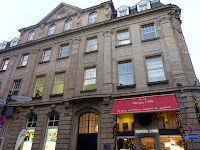
Returning to present day NOLA, the air is so humid I can cut it with a knife. The streets are narrow and filled with two-story houses complete with large French windows, patios and hanging ferns and tropical plants. Occasionally, antique stores and art galleries sprout between these rows of houses. Their signs are in English and French as are the names of streets in this area. Traffic is a riot on these narrow streets and if it weren’t for giant SUVs lining next to horse-drawn carriages, you could assume that you’ve landed in some French colony in the South Pacific. Not quite. This is the French Quarter.


Most
every tourist tries to get a room in one of the many hotels in this
district. With its architecture, antique shops, distinctive French
influence and numerous bars on legendary Bourbon Street, the French
Quarter is an explosive amalgam of tradition, modernity, decadence and
debauchery.Our
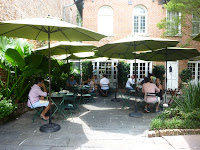
stroll around the Quarter begins after a well-deserved brunch at Café
Amelie. Recommended by  tourists and residents alike, the café’s menu
includes a healthy mix of French food, Cajun seafood and traditional
Southern delights swimming in syrup and butter. Have a seat in the lush
courtyard and let the sound of the water fountain drown out the raucous
on the streets. As we leave, a friend points out to Lenny Kravitz
sitting a few tables away and sipping iced tea.
tourists and residents alike, the café’s menu
includes a healthy mix of French food, Cajun seafood and traditional
Southern delights swimming in syrup and butter. Have a seat in the lush
courtyard and let the sound of the water fountain drown out the raucous
on the streets. As we leave, a friend points out to Lenny Kravitz
sitting a few tables away and sipping iced tea.
On Chartres Street, the sight is dominated by gothic spires soaring to the skies. This is the St.Louis Cathedral, built over the foundations of a colonial 1727 church. The church remains the oldest place of worship in the Mississippi valley. The interior provides a cool and welcome respite from the heavy air outside.


The church faces Jackson Square (formerly Place d'Armes), filled with street musicians, artists and lazy pedestrians. In the far corner, a long line of people waits impatiently under a large green awning with dozens joining every few minutes. No visitor worth his whiskey can leave the historic Café Du Monde from his itinerary, known internationally for its hot beignets (fried French doughnuts) and strong chicory coffee. At $2.30 for 3 doughnuts, they are surprisingly cheap. With more powdered sugar on a serving than you can consume in a week, just leave your conscience at the door!


By late afternoon, Bourbon Street begins to teem with revelers. There’s never a bad time to have a drink in this city, nor is there a shortage of drinks! Almost the entire street is blocked off from traffic and people are free to carry drinks on the street. Before we lose ourselves in the madness of the scene on a Saturday night, we decide to uncover secrets of the city's dark past on a haunted walking tour. Our
tour guide is an interesting man himself. Dressed in a breezy tunic
with lots of chains, colored glasses and a unique hat, I can practically
see him practicing wizardry or voodoo when he isn’t offering tours.
“There are more dead people in this city than living people”, he
announces. This explains the many cemeteries you find all over town
where coffins are not buried but entombed several feet above the ground
(since the city is below sea level).
Our
tour guide is an interesting man himself. Dressed in a breezy tunic
with lots of chains, colored glasses and a unique hat, I can practically
see him practicing wizardry or voodoo when he isn’t offering tours.
“There are more dead people in this city than living people”, he
announces. This explains the many cemeteries you find all over town
where coffins are not buried but entombed several feet above the ground
(since the city is below sea level).
Among the many stories he revels and chills us with, one talks about a merchant who owned a palatial home in the heart of the Quarter. One drunken afternoon, after gambling away everything he owned including the house, the merchant had just a few hours to deliver the bad news to his wife at home and vacate the premises with his family and in-laws. Instead, he chose to hang himself in the living room and to this day, locals believe his spirit wanders around the house (now a restaurant called Muriel’s). The restaurant has set aside his favorite table where he ‘dines’ on occasion. Our cameras click away and after a little while, one person in the group notices an apparition near the table in her pictures. What you make of it is left to you.
The tour ends at a church featuring ‘Touchdown Jesus’- so named not just for the image but also because the Church officially requested permission from the Pope to hang the insignia of the New Orleans Saints after their victory at the Superbowl in 2010.
 The
walk has given me an appetite and it is time to sample another New
Orleans staple-gumbo. For an authentic gumbo experience, head to the
Gumbo Shop where the menu includes vegetarian gumbo for people like me.
Of course, our waitress, Kim, looks at me like I’m an alien when the
others order ‘hurricanes’ to drink and I ask for something ‘virgin’. A
hurricane is a classic New Orleans drink made with rum, fruit juice, syrup and grenadine. The Irish pub of
Pat O’Brien’s (the first bar in the country with dueling pianos) boasts of the best hurricanes in town but my friends agree
the Gumbo Shop’s drinks are actually better.
The
walk has given me an appetite and it is time to sample another New
Orleans staple-gumbo. For an authentic gumbo experience, head to the
Gumbo Shop where the menu includes vegetarian gumbo for people like me.
Of course, our waitress, Kim, looks at me like I’m an alien when the
others order ‘hurricanes’ to drink and I ask for something ‘virgin’. A
hurricane is a classic New Orleans drink made with rum, fruit juice, syrup and grenadine. The Irish pub of
Pat O’Brien’s (the first bar in the country with dueling pianos) boasts of the best hurricanes in town but my friends agree
the Gumbo Shop’s drinks are actually better.

Culture, history, gumbo and hurricanes checked off our list, the only sane thing to do next on a Saturday night is to lose ourselves in the insanity of Bourbon Street. New Orleans is one of the few places in USA where you can consume alcohol on the streets. Its residents and visitors are certainly thankful for that. There are more bars on Bourbon Street than I have ever seen on any street in the country (and I have traveled a lot!). Stumble from bar to bar, catch beads thrown from balconies and drown yourself in cups of hurricanes. Virtually nothing is taboo here and I get the feeling people come to this place specifically to get sloshed, realize their fantasies and relive the madness of their youth.
Sunday morning begins with yet another buffet of syrupy, buttery goodness - eggs, french toast, ham, hash browns, crab cakes and biscuits exclusively prepared to knock our cholesterol levels off the charts. Even though the heat is stifling well before noon, Sai and I venture out with the friends(a couple) we made the previous night. We rent a car and drive out to Oak Alley Plantation, probably the most famous and impressive of all the plantation homes that were built in Louisiana since the 18th century.
The drive to the plantation home takes a little over an hour from the city. Stepping outside the French Quarter, you get to see the other side of New Orleans. Even though Hurricane Katrina hit over 7 years ago, some of these parts are yet to fully recover from the blow. Buildings are run down and trash-filled streets are deserted in the afternoon sun. Graffiti is every where and I'm sure crime is too. We leave these streets and drive through miles of farms before we get to the 173-year old sprawling plantation home built on 25 acres.

Originally built as a sugar cane plantation, the Oak Alley plantation home has passed through several hands over the last 2 centuries. Its architecture is French Creole with high ceilings, large windows and a balcony to view the grounds. The original marble flooring was replaced with wooden floors when a subsequent owner decided to let his sons race horses across the grounds...and literally through the house.
The plantation gets its name from the stunning canopy of 28 oak trees which line up to cover the skies and create one of the most beautiful sights you can find in this part of the country. The canopy stretches till the end of the grounds near the banks of the Mississippi.


 Day 3 in NOLA is our final day in this fantastic city. I get off to an early start so I can visit some of the many antique stores on Royal Street. The start also allows me to wander through the streets of the Quarter and capture some more shots of the French and Spanish architecture here. You can spend hours, if not days, exploring the Quarter's many stores, boutiques, galleries and mansions.


 tourists and residents alike, the café’s menu
includes a healthy mix of French food, Cajun seafood and traditional
Southern delights swimming in syrup and butter. Have a seat in the lush
courtyard and let the sound of the water fountain drown out the raucous
on the streets. As we leave, a friend points out to Lenny Kravitz
sitting a few tables away and sipping iced tea.
tourists and residents alike, the café’s menu
includes a healthy mix of French food, Cajun seafood and traditional
Southern delights swimming in syrup and butter. Have a seat in the lush
courtyard and let the sound of the water fountain drown out the raucous
on the streets. As we leave, a friend points out to Lenny Kravitz
sitting a few tables away and sipping iced tea.
On Chartres Street, the sight is dominated by gothic spires soaring to the skies. This is the St.Louis Cathedral, built over the foundations of a colonial 1727 church. The church remains the oldest place of worship in the Mississippi valley. The interior provides a cool and welcome respite from the heavy air outside.


The church faces Jackson Square (formerly Place d'Armes), filled with street musicians, artists and lazy pedestrians. In the far corner, a long line of people waits impatiently under a large green awning with dozens joining every few minutes. No visitor worth his whiskey can leave the historic Café Du Monde from his itinerary, known internationally for its hot beignets (fried French doughnuts) and strong chicory coffee. At $2.30 for 3 doughnuts, they are surprisingly cheap. With more powdered sugar on a serving than you can consume in a week, just leave your conscience at the door!


By late afternoon, Bourbon Street begins to teem with revelers. There’s never a bad time to have a drink in this city, nor is there a shortage of drinks! Almost the entire street is blocked off from traffic and people are free to carry drinks on the street. Before we lose ourselves in the madness of the scene on a Saturday night, we decide to uncover secrets of the city's dark past on a haunted walking tour.
 Our
tour guide is an interesting man himself. Dressed in a breezy tunic
with lots of chains, colored glasses and a unique hat, I can practically
see him practicing wizardry or voodoo when he isn’t offering tours.
“There are more dead people in this city than living people”, he
announces. This explains the many cemeteries you find all over town
where coffins are not buried but entombed several feet above the ground
(since the city is below sea level).
Our
tour guide is an interesting man himself. Dressed in a breezy tunic
with lots of chains, colored glasses and a unique hat, I can practically
see him practicing wizardry or voodoo when he isn’t offering tours.
“There are more dead people in this city than living people”, he
announces. This explains the many cemeteries you find all over town
where coffins are not buried but entombed several feet above the ground
(since the city is below sea level). Among the many stories he revels and chills us with, one talks about a merchant who owned a palatial home in the heart of the Quarter. One drunken afternoon, after gambling away everything he owned including the house, the merchant had just a few hours to deliver the bad news to his wife at home and vacate the premises with his family and in-laws. Instead, he chose to hang himself in the living room and to this day, locals believe his spirit wanders around the house (now a restaurant called Muriel’s). The restaurant has set aside his favorite table where he ‘dines’ on occasion. Our cameras click away and after a little while, one person in the group notices an apparition near the table in her pictures. What you make of it is left to you.
The tour ends at a church featuring ‘Touchdown Jesus’- so named not just for the image but also because the Church officially requested permission from the Pope to hang the insignia of the New Orleans Saints after their victory at the Superbowl in 2010.


Culture, history, gumbo and hurricanes checked off our list, the only sane thing to do next on a Saturday night is to lose ourselves in the insanity of Bourbon Street. New Orleans is one of the few places in USA where you can consume alcohol on the streets. Its residents and visitors are certainly thankful for that. There are more bars on Bourbon Street than I have ever seen on any street in the country (and I have traveled a lot!). Stumble from bar to bar, catch beads thrown from balconies and drown yourself in cups of hurricanes. Virtually nothing is taboo here and I get the feeling people come to this place specifically to get sloshed, realize their fantasies and relive the madness of their youth.


Sunday morning begins with yet another buffet of syrupy, buttery goodness - eggs, french toast, ham, hash browns, crab cakes and biscuits exclusively prepared to knock our cholesterol levels off the charts. Even though the heat is stifling well before noon, Sai and I venture out with the friends(a couple) we made the previous night. We rent a car and drive out to Oak Alley Plantation, probably the most famous and impressive of all the plantation homes that were built in Louisiana since the 18th century.
The drive to the plantation home takes a little over an hour from the city. Stepping outside the French Quarter, you get to see the other side of New Orleans. Even though Hurricane Katrina hit over 7 years ago, some of these parts are yet to fully recover from the blow. Buildings are run down and trash-filled streets are deserted in the afternoon sun. Graffiti is every where and I'm sure crime is too. We leave these streets and drive through miles of farms before we get to the 173-year old sprawling plantation home built on 25 acres.
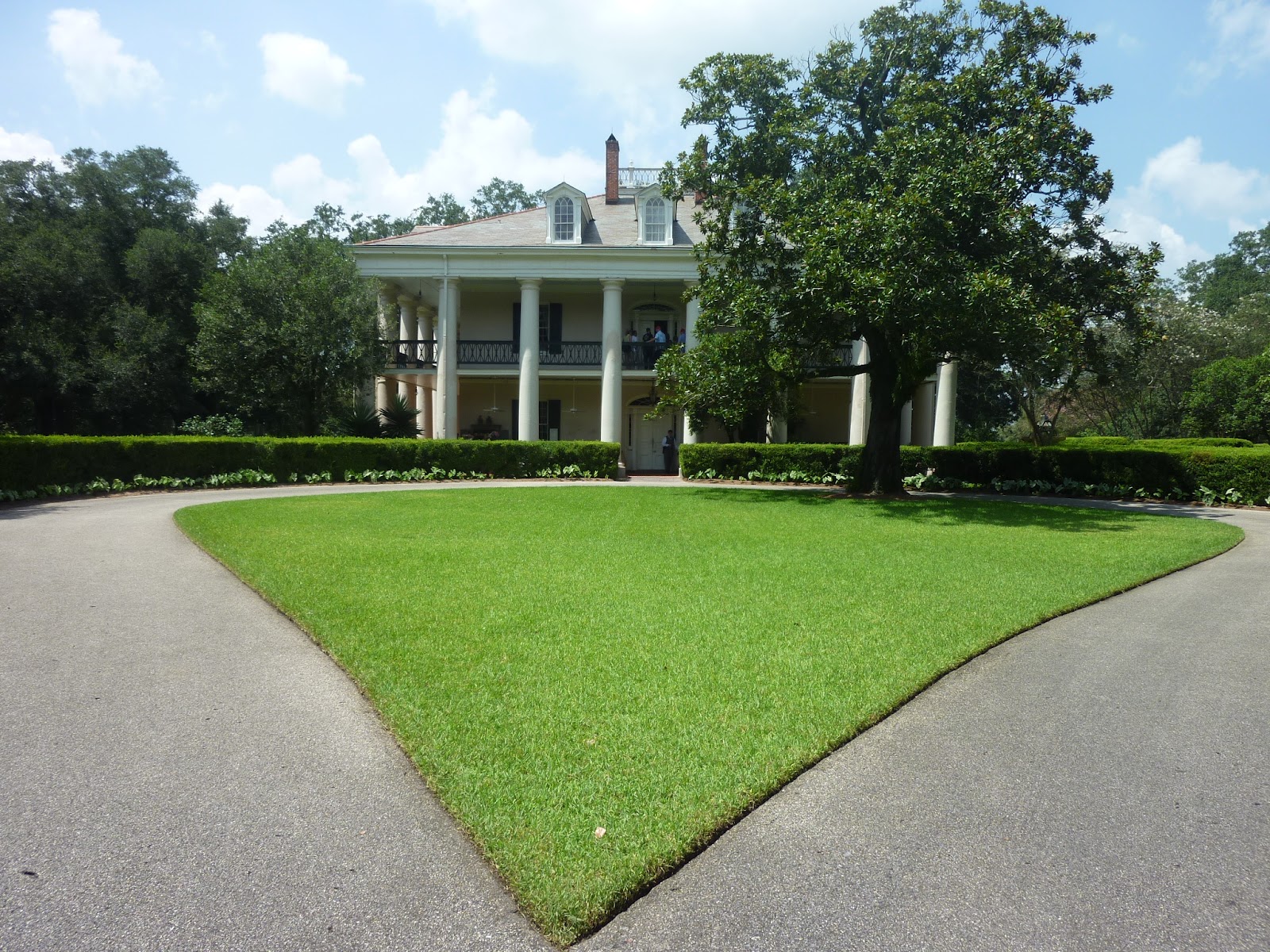
Originally built as a sugar cane plantation, the Oak Alley plantation home has passed through several hands over the last 2 centuries. Its architecture is French Creole with high ceilings, large windows and a balcony to view the grounds. The original marble flooring was replaced with wooden floors when a subsequent owner decided to let his sons race horses across the grounds...and literally through the house.
The plantation gets its name from the stunning canopy of 28 oak trees which line up to cover the skies and create one of the most beautiful sights you can find in this part of the country. The canopy stretches till the end of the grounds near the banks of the Mississippi.


Several other plantation homes are within minutes from Oak Alley and on the same road. However, the afternoon sun has zapped us out of energy and we aren't prepared to explore more acres of cotton or sugar cane plantations for all the mint juleps in the state.
We head back to our hotel and soak our sweaty selves in the pool on the roof top. The water is warm and frankly, quite gross. Practically everything around us smells of warm beer! After the sun goes down, we venture out to the edge of the Quarter to Frenchmen Street in the Marigny area. If you want a break from the drinking and debauchery of Bourbon Street, visit one of the many cafes, restaurants and bars on Frenchmen Street which feature live jazz and blues performances. The Maison is one of the more popular venues with good reason.
 and frankly, quite gross. Practically everything around us smells of warm beer! After the sun goes down, we venture out to the edge of the Quarter to Frenchmen Street in the Marigny area. If you want a break from the drinking and debauchery of Bourbon Street, visit one of the many cafes, restaurants and bars on Frenchmen Street which feature live jazz and blues performances. The Maison is one of the more popular venues with good reason.
Our night ends with another stop at Cafe du Monde. It is nearly midnight but the cafe is open 24 hours a day and throughout the year. This is definitely a better time to enjoy beignets with fewer people around. Perhaps it is the sugar but I am almost tempted to call the experience 'relaxing'.
Day 3 in NOLA is our final day in this fantastic city. I get off to an early start so I can visit some of the many antique stores on Royal Street. The start also allows me to wander through the streets of the Quarter and capture some more shots of the French and Spanish architecture here. You can spend hours, if not days, exploring the Quarter's many stores, boutiques, galleries and mansions. 
Later in the afternoon, Sai and I head to the Garden District which is an affluent neighborhood of New Orleans. Before we take in some of the splendid homes in this area, we visit the Lafayette Cemetery-one of the oldest among the many cemeteries in town. The air is heavy and there isn't a sound to be heard besides the buzzing of crickets. Even though it is in the middle of the day, there's a certain melancholy which every tomb's fading paint exudes. One of these tombs belongs to a family where the parents died at 50 and no child lived to see the age of 21.


Getting back on St.Charles Avenue, our final experience in New Orleans is a ride on the St.Charles Street Car line. The car is vintage and charming with shiny wooden seats and bells that clang along the way. The ride takes us down St.Charles Avenue lined with some of the wealthiest houses you can ever find in the South. The sheer size of every house, its impressive drive way and opulent gardens will leave you awestruck as you begin to wonder about the collective wealth of the families that occupy these houses.


New
Orleans is undoubtedly a city of extremes. Bar-hoppers are happy to
drown in alcohol while fans of live jazz wouldn’t budge if the building caught fire. The wealthy Southern families on St.Charles Avenue in the
Garden District have jaw-dropping homes while less affluent people find
their paradise living right on the sidewalk. Hurricanes may come and go,
leaving the city in shambles, but they cannot wash away the many colors
of this city. Those remain truly indelible.
As I settle into my flight back home, I slip into conversation with the lady next to me. She was here to visit family outside New Orleans. She was glad to avoid the fervor of Bourbon Street. “I could never stand the madness of this place. I tell my daughter this is the closest you are going to get to hell”. New Orleans may not be everyone’s cup of tea. But a splash of bourbon can fix that quite easily. In the Big Easy, you don’t have to go too far for that.